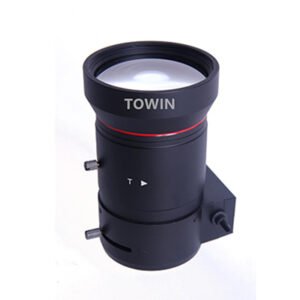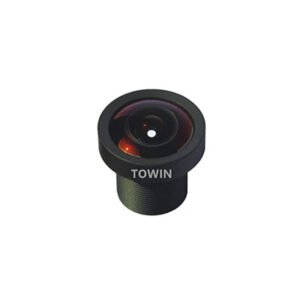
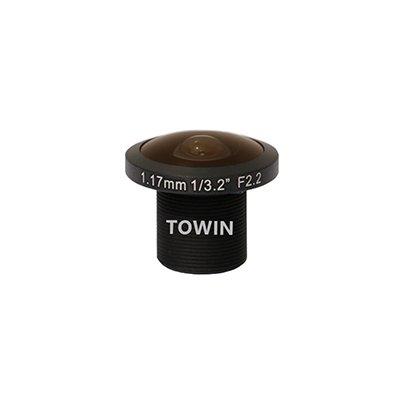
Photography enthusiasts seeking to capture sweeping landscapes, dynamic action shots, or creative architectural compositions often turn to the Fisheye Lens for its unique 180-degree field of view. However, chromatic aberration—a common issue causing color fringing around high-contrast edges—can undermine image quality. Enter the Fisheye Lens with Minimal Chromatic Aberration, a game-changer for photographers prioritizing clarity and color accuracy.
What Is Chromatic Aberration, and Why Does It Matter?
Chromatic aberration occurs when a lens fails to focus all wavelengths of light at the same point, resulting in purple or green fringing around edges. This distortion is particularly noticeable in Fisheye Lenses due to their extreme curvature. A Fisheye Lens with Minimal Chromatic Aberration uses advanced optics, such as aspherical elements and low-dispersion glass, to correct this issue. By minimizing color fringing, these lenses produce sharper images with natural-looking tones, even in challenging lighting conditions.
For photographers, reduced chromatic aberration means less post-processing work and more time focusing on creativity. Whether shooting landscapes, underwater scenes, or virtual reality content, a Fisheye Lens with Minimal Chromatic Aberration ensures every detail stands out.
Key Features of a Fisheye Lens with Minimal Chromatic Aberration
1. Advanced Optical Design:
Modern Fisheye Lenses incorporate multi-coating technologies and extra-low dispersion (ED) glass to combat chromatic aberration. For example, the Nikon 8-15mm Fisheye uses ED elements to deliver edge-to-edge sharpness.
2. Wide Aperture Range:
Lenses like the Sigma 15mm f/2.8 EX DG Diagonal Fisheye offer fast apertures (e.g., f/2.8) for low-light shooting while maintaining minimal aberration.
3. Durable Build Quality:
Weather-sealed construction ensures reliability in harsh environments, making these lenses ideal for outdoor and adventure photography.
4. Compatibility with Mirrorless and DSLR Systems:
Many manufacturers now offer Fisheye Lenses with Minimal Chromatic Aberration for both mirrorless and DSLR cameras, broadening accessibility.
How to Choose the Best Fisheye Lens with Minimal Chromatic Aberration
Full-Frame vs. Crop Sensor:
Full-frame lenses provide a true 180-degree view, while crop-sensor models offer a narrower field of view (e.g., 100-120 degrees).
Focal Length:
Circular Fisheye Lenses (e.g., 8mm) create a circular image with black corners, while diagonal Fisheye Lenses (e.g., 15mm) fill the frame.
Price Point:
Premium options like the Canon EF 8-15mm f/4L Fisheye USM cost upwards of 1,200,whilebudget−friendlyalternativesliketheRokinon8mmf/3.5UMCFisheyeoffersolidperformanceforunder 300.
Autofocus vs. Manual Focus:
Autofocus lenses are convenient for fast-paced shooting, but manual focus models often provide sharper results at wider apertures.
Tips for Using a Fisheye Lens with Minimal Chromatic Aberration
1. Shoot in RAW Format:
RAW files retain more detail, making it easier to correct minor aberrations in post-processing.
2. Avoid High-Contrast Scenes:
While these lenses minimize fringing, extremely bright light sources (e.g., the sun) can still cause issues. Use lens hoods or adjust angles to reduce glare.
3. Experiment with Perspective:
Fisheye Lenses exaggerate proximity, so get close to subjects for dramatic effects. For landscapes, position the horizon centrally to minimize distortion.
4. Use a Tripod:
Stabilizing your camera ensures crisp images, especially when shooting at slower shutter speeds.
5. Post-Processing Adjustments:
Tools like Adobe Lightroom’s “Defringe” slider can further reduce residual chromatic aberration.
FAQs
What causes chromatic aberration in Fisheye Lenses?
Chromatic aberration stems from light wavelengths refracting at different angles due to lens design flaws. A Fisheye Lens with Minimal Chromatic Aberration uses specialized glass and coatings to align wavelengths correctly.
Are Fisheye Lenses with Minimal Chromatic Aberration worth the investment?
Absolutely! For professional photographers or enthusiasts prioritizing image quality, these lenses offer unparalleled sharpness and color accuracy, reducing the need for extensive editing.
Can I use a Fisheye Lens with Minimal Chromatic Aberration for portraits?
While unconventional, Fisheye Lenses can create artistic portraits with exaggerated features. However, distortion is more pronounced at the edges, so center the subject.
Do all Fisheye Lenses have chromatic aberration?
No, but most entry-level models exhibit noticeable fringing. Premium options like the Sony FE 12-24mm f/2.8 GM are engineered to minimize this issue.
How do I clean a Fisheye Lens with Minimal Chromatic Aberration?
Use a microfiber cloth and lens cleaning solution. Avoid touching the glass directly, and store the lens in a padded case to prevent scratches.
Final Thoughts
A Fisheye Lens with Minimal Chromatic Aberration is a powerful tool for photographers seeking to push creative boundaries. By combining ultra-wide perspectives with crisp, color-accurate imagery, these lenses unlock new possibilities in landscape, action, and experimental photography.