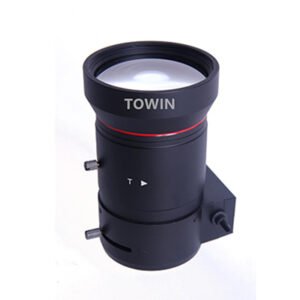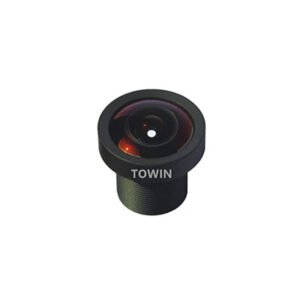

In the realm of photography, videography, and industrial imaging, low distortion lens software correction has emerged as a cornerstone of innovation. This technology addresses a critical challenge: optical distortion, which distorts straight lines into curves and compromises image accuracy.
What Is Low Distortion Lens Software Correction?
Low distortion lens software correction refers to digital algorithms designed to compensate for optical distortions caused by lens imperfections. Unlike traditional hardware fixes, which rely on costly lens designs, software correction uses post-processing techniques to analyze and rectify distortions in real time. This approach is cost-effective, versatile, and increasingly adopted across industries.
At its core, the process involves mapping distortion patterns—such as barrel distortion (where edges bulge outward) or pincushion distortion (where edges pinch inward)—and applying inverse transformations to restore geometric accuracy. Advanced algorithms even account for chromatic aberration and vignetting, ensuring uniformity across the image.
How Does Low Distortion Lens Software Correction Work?
The workflow begins with capturing an image through a lens with inherent distortions. Software then identifies distortion parameters using calibration charts or machine learning models. For instance, a grid pattern test image can reveal deviations from straight lines, which the software quantifies into mathematical models.
Next, the algorithm applies a correction matrix to each pixel, repositioning it to counteract distortion. This step requires high computational precision to avoid introducing artifacts. Modern tools like Adobe Lightroom, PTGui, and OpenCV offer automated correction for common lenses, while custom solutions cater to specialized optics.
Key Benefits of Low Distortion Lens Software Correction
- 1. Cost Efficiency: Hardware solutions like aspherical lenses are expensive. Software correction achieves similar results at a fraction of the cost.
- 2. Flexibility: One software tool can correct multiple lens types, eliminating the need for proprietary hardware.
- 3. Speed: Real-time correction enables instant feedback, crucial for live streaming or surveillance systems.
- 4. Precision: Advanced algorithms achieve sub-pixel accuracy, surpassing manual adjustments.
- 5. Scalability: Cloud-based solutions allow bulk processing, ideal for large datasets in medical or satellite imaging.
Industries Leveraging Low Distortion Lens Software Correction
- Photography & Videography: Portrait photographers use correction to maintain facial symmetry, while landscape artists ensure horizon lines remain straight.
- Surveillance & Security: CCTV systems rely on distortion-free footage for accurate facial recognition and license plate detection.
- Medical Imaging: Endoscopes and MRI machines depend on precise visuals for diagnostics, where even minor distortions can lead to misinterpretations.
- Autonomous Vehicles: Lidar and camera systems use correction to map environments accurately, ensuring safe navigation.
- Aerospace: Satellite imagery requires pixel-perfect alignment for climate monitoring and geographic mapping.
Challenges & Limitations
- Computational Load: High-resolution images demand significant processing power, which may slow down older systems.
- Edge Cases: Extreme distortions (e.g., fish-eye lenses) require specialized algorithms to avoid artifacts.
- Latency: Real-time applications like live streaming need optimized code to prevent delays.
However, advancements in GPU acceleration and AI-driven models are steadily overcoming these barriers, making software correction more accessible than ever.
FAQs
What software is best for low distortion lens correction?
Popular choices include Adobe Photoshop (Lens Correction filter), PTGui (for panoramas), and Hugin (open-source alternative). For developers, OpenCV and MATLAB offer customizable libraries.
Can software correction completely eliminate distortion?
While it can reduce distortion by over 90%, extreme cases may retain minor imperfections. Combining software with high-quality lenses yields the best results.
Is low distortion lens software correction compatible with all cameras?
Most modern cameras are supported, but calibration is lens-specific. Some tools offer generic profiles, while others require custom calibration for optimal accuracy.
Does correction affect image quality?
When done correctly, it enhances quality by preserving geometric integrity. Poorly implemented algorithms, however, may introduce blurring or noise.
How long does it take to correct an image?
Processing time depends on resolution and software efficiency. A 12MP image might take 1–5 seconds on a mid-range laptop, while batch processing can handle hundreds of images simultaneously.
The Future of Low Distortion Lens Software Correction
The integration of AI and machine learning is set to revolutionize this field. Neural networks can now learn distortion patterns from vast datasets, enabling one-click corrections for any lens. Additionally, edge computing will bring real-time correction to IoT devices, from smart glasses to industrial sensors.
As 5G and cloud technologies expand, low distortion lens software correction will become ubiquitous, democratizing high-precision imaging for creators and enterprises alike.
Conclusion
Low distortion lens software correction is a game-changer, merging affordability with unparalleled precision. By understanding its mechanics, benefits, and applications, professionals across industries can elevate their visual outputs to new heights.