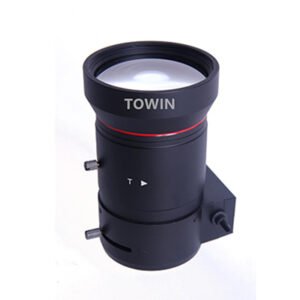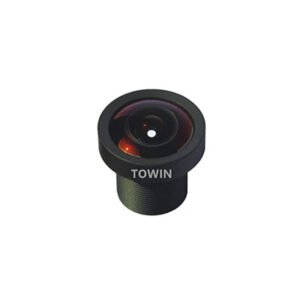

In an era where security threats evolve rapidly, traditional CCTV systems often fall short in low-light or obscured environments. Enter the thermal imaging CCTV lens—a groundbreaking innovation that detects heat signatures instead of relying on visible light, ensuring uninterrupted monitoring even in total darkness, fog, or smoke.
How Does a Thermal Imaging CCTV Lens Work?
A thermal imaging CCTV lens operates by capturing infrared radiation emitted by objects, converting it into a thermal image. Unlike conventional lenses that depend on ambient light, thermal lenses detect temperature differences, creating a “heat map” of the scene. This makes them ideal for:
Nighttime surveillance without additional lighting.
- Identifying hidden objects or individuals behind obstacles.
- Monitoring large areas like borders, warehouses, or industrial sites.
The core components include a microbolometer sensor, which absorbs infrared waves, and advanced software that translates the data into a visible image. Modern thermal lenses also integrate AI-driven analytics to flag anomalies, such as sudden temperature spikes or unauthorized movement.
Top 5 Applications of a Thermal Imaging CCTV Lens
1. Border and Perimeter Security
Thermal lenses excel in detecting intruders across vast, unlit terrains. For example, border patrol agencies use them to identify human activity miles away, even in dense foliage or adverse weather.
2. Critical Infrastructure Protection
Power plants, data centers, and oil refineries rely on thermal imaging to spot overheating equipment or electrical faults before they escalate into fires or outages.
3. Law Enforcement and Search & Rescue
Police and rescue teams deploy thermal lenses to locate missing persons or suspects in low-visibility conditions. A study by the National Institute of Justice found that thermal imaging reduces search times by up to 60% in wooded areas.
4. Maritime Surveillance
Ships and ports use thermal CCTV lenses to detect small boats or swimmers approaching under cover of darkness, enhancing anti-piracy measures.
5. Wildlife Conservation
Researchers track endangered species or poachers at night without disturbing habitats, as thermal imaging doesn’t require artificial light.
Why Choose a Thermal Imaging CCTV Lens Over Traditional Cameras?
- All-Weather Reliability: Works in fog, rain, dust, or smoke.
- Cost-Effective 24/7 Monitoring: Eliminates the need for expensive lighting systems.
- Long-Range Detection: Identifies threats up to 10x farther than standard cameras.
- Low Maintenance: No moving parts or frequent calibrations required.
For instance, a thermal imaging CCTV lens installed at a solar farm detected a faulty panel overheating 500 meters away, preventing a potential fire and saving $50,000 in repairs.
Future Trends in Thermal Imaging CCTV Lenses
- AI-Powered Analytics: Automatically classifies threats (e.g., human vs. animal) to reduce false alarms.
- Miniaturization: Smaller lenses for drones or wearable devices.
- Integration with IoT: Real-time alerts sent to smartphones or control centers.
Experts predict the global thermal imaging market will reach $12 billion by 2027, driven by rising demand for smart security solutions.
FAQs
Can a thermal imaging CCTV lens see through walls?
No. Thermal lenses detect heat emitted by surfaces, not through solid objects like walls. However, they can identify heat leaks or anomalies behind thin materials (e.g., drywall).
How far can a thermal imaging CCTV lens detect objects?
Detection range depends on the lens’s resolution and sensor quality. High-end models can spot a human from 2 kilometers away, while entry-level lenses offer up to 300 meters.
Are thermal imaging CCTV lenses legal for residential use?
Yes, but regulations vary by region. Always check local privacy laws before installation. For example, in the EU, GDPR restricts unauthorized surveillance of private property.
Do thermal lenses require regular calibration?
Most modern thermal imaging CCTV lenses are factory-calibrated and need minimal maintenance. However, extreme temperatures or physical impacts may necessitate recalibration.
Can thermal imaging detect invisible gases?
Standard thermal lenses cannot, but specialized models with gas detection filters (e.g., for methane or CO2) are available for industrial safety applications.
Conclusion
If your security needs demand reliability in harsh conditions or round-the-clock monitoring, a thermal imaging CCTV lens is a worthwhile investment. While it may not replace traditional cameras entirely, pairing the two creates a foolproof system.