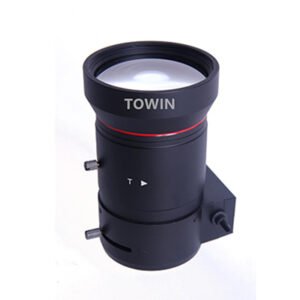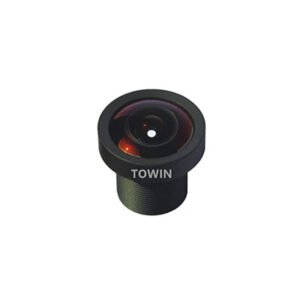
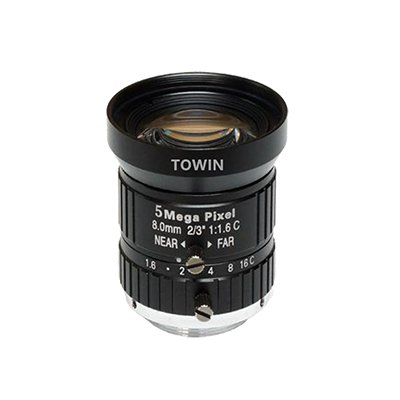
In modern industrial settings, machinery and equipment are often subjected to extreme temperatures, vibrations, and environmental stressors. For imaging systems, this poses a significant challenge: standard lenses can warp, lose focus, or degrade under heat, leading to costly downtime and inaccurate results. Enter the Thermally Stable Industrial Lens—a cutting-edge solution designed to maintain optical clarity and structural integrity even in the harshest conditions.
Why Thermal Stability Matters in Industrial Lenses
Industrial processes like metal fabrication, automotive manufacturing, and semiconductor production generate intense heat. A conventional lens might expand, contract, or distort under such conditions, compromising image quality. A Thermally Stable Industrial Lens, however, uses advanced materials and engineering to resist thermal expansion, ensuring consistent performance across a wide temperature range.
This stability is critical for applications like:
- Quality Inspection: Detecting defects in hot-rolled steel or molten glass.
- Robotic Vision: Guiding automated systems in high-temperature environments.
- Laser Processing: Aligning beams with precision during cutting or welding.
By eliminating thermal drift, these lenses reduce maintenance costs and improve operational efficiency.
Key Features of a Thermally Stable Industrial Lens
1. High-Temperature Resistance
Built from materials like fused silica or specialized polymers, these lenses withstand temperatures up to 500°C (932°F) without deformation.
2. Low Coefficient of Thermal Expansion (CTE)
A low CTE ensures minimal dimensional changes, maintaining focus and alignment even as temperatures fluctuate.
3. Enhanced Durability
Scratch-resistant coatings and rugged housing protect the lens from abrasion, chemicals, and mechanical impact.
4. Optical Precision
Advanced manufacturing techniques like aspherical grinding and anti-reflective coatings minimize aberrations, delivering sharp images in any condition.
5. Compatibility with Industrial Systems
These lenses integrate seamlessly with CMOS/CCD cameras, machine vision software, and robotic arms, making them ideal for automation.
Applications Across Industries
The versatility of a Thermally Stable Industrial Lens makes it indispensable in sectors like:
- Automotive: Inspecting engine components during assembly or monitoring paint curing processes.
- Aerospace: Verifying turbine blade integrity or inspecting welds in high-temperature alloys.
- Electronics: Monitoring soldering processes or inspecting circuit boards in reflow ovens.
- Food & Beverage: Ensuring hygiene in ovens or pasteurization chambers.
How to Choose the Right Thermally Stable Industrial Lens
Selecting the optimal lens depends on your specific needs:
- Temperature Range: Ensure the lens can handle your environment’s peak heat.
- Wavelength Compatibility: Match the lens to your camera’s sensor (e.g., visible, IR, or UV light).
- Focal Length: Choose a length that suits your working distance and field of view.
- Mounting Options: Verify compatibility with your existing hardware (e.g., C-mount, F-mount).
For instance, a lens rated for -40°C to 500°C would suit both arctic and desert applications, while a shorter focal length might be better for close-up inspections.
Maintenance Tips for Longevity
Even the most robust Thermally Stable Industrial Lens requires care:
- Clean Regularly: Use a microfiber cloth and isopropyl alcohol to remove dust or residue.
- Avoid Sudden Temperature Changes: Gradual acclimation prevents thermal shock.
- Store Properly: Keep lenses in a climate-controlled case when not in use.
- Schedule Inspections: Check for scratches or coating damage annually.
Proper maintenance can extend a lens’s lifespan by up to 50%, saving money on replacements.
FAQs
What makes a lens thermally stable?
A thermally stable lens uses materials with a low coefficient of thermal expansion (CTE), such as fused silica or specialized polymers, to resist deformation under heat.
Can these lenses be used in cryogenic environments?
Yes! Many thermally stable lenses are rated for both high and low temperatures, making them suitable for cryogenic applications like LNG processing.
How do they compare to standard industrial lenses in cost?
While initially more expensive, their durability and reduced downtime often result in long-term savings.
Are they compatible with all machine vision cameras?
Most thermally stable lenses come with standard mounts (e.g., C-mount) and are compatible with popular camera brands like Basler, FLIR, and Sony.
Conclusion
In industrial environments where precision and uptime are non-negotiable, a Thermally Stable Industrial Lens is not just an upgrade—it’s a necessity. By combining advanced materials, optical excellence, and rugged design, these lenses deliver unmatched performance in the toughest conditions.