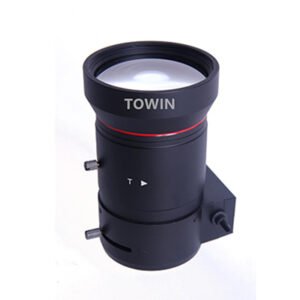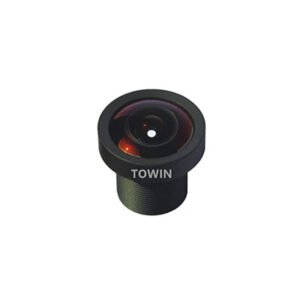

Microscopy has long been a cornerstone of scientific discovery, enabling researchers to visualize structures invisible to the naked eye. However, traditional lenses often introduce distortions—such as chromatic aberration, spherical aberration, or field curvature—that compromise image quality. Enter the low distortion lens for microscopy, a game-changing innovation designed to minimize these errors and elevate imaging precision.
What Is a Low Distortion Lens for Microscopy?
A low distortion lens for microscopy is an optical component engineered to reduce geometric and chromatic aberrations that distort images. Unlike conventional lenses, which may bend light unevenly across the field of view, low distortion lenses use advanced materials and coatings to maintain uniform focus and color accuracy. This ensures that specimens appear sharp, true-to-life, and free from artifacts like edge blurring or color fringing.
Why Distortion Matters in Microscopy
Distortion in microscopy images can lead to misinterpretation of data, especially in quantitative analysis. For example, measuring the size of a cell or the spacing between molecules becomes unreliable if the edges of the image are stretched or compressed. High-resolution tasks, such as tracking particle movement or analyzing tissue architecture, demand flawless optics. A low distortion lens for microscopy addresses these challenges by delivering:
- Flat field of view: Minimizes curvature at the image edges.
- Chromatic correction: Reduces color separation in multicolor fluorescence imaging.
- High numerical aperture (NA): Captures more light for brighter, clearer images.
Key Benefits of Using a Low Distortion Lens for Microscopy
1. Enhanced Image Quality
Low distortion lenses eliminate edge blurring and color fringing, ensuring every detail is rendered with pinpoint accuracy. This is critical for applications like semiconductor inspection, where even nanometer-scale defects must be detected.
2. Improved Measurement Accuracy
In fields like metrology or pathology, precise measurements rely on distortion-free imaging. A low distortion lens for microscopy reduces errors in size calculations, enabling researchers to trust their data.
3. Cost Efficiency
While low distortion lenses may have a higher upfront cost, they reduce the need for post-processing corrections or repeated experiments due to poor image quality. Over time, this saves time and resources.
4. Versatility Across Techniques
Whether you’re using brightfield, fluorescence, or confocal microscopy, a low distortion lens for microscopy adapts to diverse imaging modalities. Its compatibility with various filters and light sources makes it a versatile tool for multidisciplinary labs.
5. Long-Term Durability
High-quality low distortion lenses are built with scratch-resistant coatings and robust materials, ensuring they withstand frequent use without degrading performance.
Applications of Low Distortion Lenses in Microscopy
- Biological Research: Visualizing live cells, tissues, or organisms with minimal distortion.
- Materials Science: Analyzing crystal structures or surface defects in metals and polymers.
- Nanotechnology: Imaging nanoparticles or quantum dots with sub-wavelength resolution.
- Medical Diagnostics: Detecting early-stage cancers or pathogens in histological samples.
How to Choose the Right Low Distortion Lens for Microscopy
Selecting the ideal lens depends on your specific needs:
- Magnification Range: Ensure the lens supports your required zoom levels.
- Working Distance: Longer distances are better for thick specimens or live-cell imaging.
- Coating Type: Anti-reflective coatings improve light transmission and reduce glare.
- Compatibility: Check if the lens fits your microscope model (e.g., Olympus, Nikon, Zeiss).
FAQs
What causes distortion in microscopy images?
Distortion arises from imperfections in lens design, such as uneven light bending (spherical aberration) or color separation (chromatic aberration). A low distortion lens for microscopy uses advanced engineering to counteract these effects.
Can I retrofit a low distortion lens to my existing microscope?
In most cases, yes. Many manufacturers offer lenses compatible with popular microscope brands. Always verify compatibility before purchasing.
Do low distortion lenses work with fluorescence microscopy?
Absolutely! Many low distortion lenses are optimized for fluorescence imaging, reducing autofluorescence and improving signal-to-noise ratios.
How often should I clean my low distortion lens?
Clean the lens with a soft, lint-free cloth and optical-grade solvent after each use to prevent dust or oil buildup, which can degrade image quality.
Conclusion
A low distortion lens for microscopy is not just an upgrade—it’s a necessity for researchers who demand precision, reliability, and versatility. By minimizing optical errors, these lenses unlock new possibilities in biological, material, and nanoscale imaging.