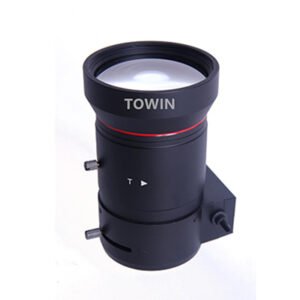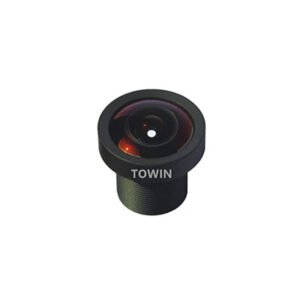

In the realm of optics, achieving crystal-clear imagery without compromising on accuracy is the holy grail. Enter high-end Low Distortion Lenses—a technological marvel designed to minimize aberrations, enhance edge-to-edge sharpness, and deliver unparalleled visual fidelity.
What Are High-End Low Distortion Lenses?
High-end low distortion lenses are premium optical components engineered to reduce geometric distortions such as barrel distortion (where straight lines bow outward) or pincushion distortion (where lines bow inward). Unlike standard lenses, which may sacrifice image quality for affordability, these lenses prioritize precision through advanced materials, aspherical elements, and meticulous calibration.
Key Features of High-End Low Distortion Lenses
1. Aspherical Lens Elements
Traditional spherical lenses struggle with distortion due to their curved surfaces. High-end low distortion lenses incorporate aspherical elements, which have non-uniform curvatures to correct aberrations proactively. This results in flatter fields of focus and minimal edge distortion.
2. Advanced Coatings
Multi-layer anti-reflective coatings reduce flare and ghosting while enhancing contrast. This is critical for industries like surveillance or microscopy, where stray light can degrade image quality.
3. Precision Engineering
Manufactured under strict tolerances, these lenses undergo rigorous quality control to ensure consistency. For example, Zeiss, a leader in optical technology, uses computer-aided design (CAD) to simulate and refine lens performance before production.
4. Durability
High-end low distortion lenses often feature rugged housing and weather-sealing, making them suitable for harsh environments like aerospace or outdoor cinematography.
Applications Across Industries
The versatility of high-end low distortion lenses spans multiple sectors:
- Photography & Cinematography: Architectural and product photographers rely on these lenses to capture straight lines and accurate shapes. Filmmakers use them for visual effects (VFX) plates, where distortion-free footage is essential for seamless compositing.
- Industrial Imaging: In quality control and robotics, low distortion lenses ensure precise measurements and object recognition. For instance, a semiconductor manufacturer might use them to inspect microchips without warping.
- Medical & Scientific Research: Microscopes and endoscopes equipped with these lenses provide clearer, more accurate visuals, aiding in diagnoses or material analysis.
- Surveillance & Security: Low distortion ensures wide-angle views without sacrificing detail, critical for monitoring large areas like stadiums or airports.
Why Invest in High-End Low Distortion Lenses?
1. Superior Image Quality
The primary benefit is obvious: fewer distortions mean more accurate, professional-grade results. This is invaluable for clients who demand perfection, such as advertising agencies or engineering firms.
2. Long-Term Cost Savings
While high-end low distortion lenses are pricier upfront, their durability and precision reduce the need for frequent replacements or post-processing corrections.
3. Competitive Edge
In fields like real estate photography or 3D modeling, using these lenses can differentiate your work from competitors still struggling with warped images.
4. Future-Proofing
As industries like augmented reality (AR) and autonomous vehicles evolve, the demand for distortion-free optics will skyrocket. Investing now positions you ahead of the curve.
FAQs
Can these lenses be used with any camera?
Most high-end low distortion lenses are designed for DSLR, mirrorless, or cinema cameras with compatible mounts. Always check compatibility before purchasing.
Are they worth the extra cost for hobbyists?
If you prioritize image quality and plan to monetize your work, yes. For casual use, a mid-range lens might suffice.
How often should I clean these lenses?
Clean them as needed with a microfiber cloth and lens solution. Avoid abrasive materials to prevent scratches.
Do these lenses work well in low light?
Yes, many high-end models feature wide apertures (e.g., f/1.4 or f/2.8) to excel in low-light conditions.
Can I use filters with low distortion lenses?
Absolutely. Just ensure the filters are high-quality to avoid introducing new distortions.
Conclusion
High-end low distortion lenses represent the zenith of optical innovation, offering unmatched precision for professionals and enthusiasts alike. By investing in these tools, you’re not just buying a lens—you’re securing a competitive advantage in an image-driven world.