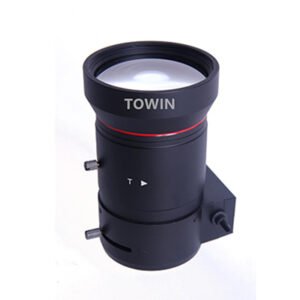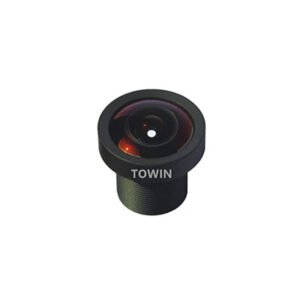
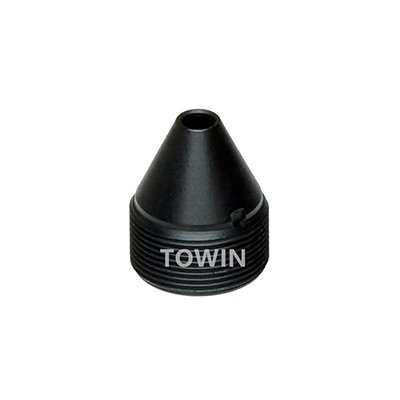
Aerospace imaging has long relied on advanced optics to capture high-resolution data from satellites, spacecraft, and telescopes. Among these innovations, the aerospace imaging pinhole lens stands out as a groundbreaking technology that combines simplicity with precision. Unlike traditional lenses, which use multiple glass elements to focus light, a pinhole lens operates on a fundamental principle: a tiny aperture restricts incoming light, creating sharp images without the need for complex optics.
How Does an Aerospace Imaging Pinhole Lens Work?
At its core, a pinhole lens functions by allowing light to pass through a minuscule opening, projecting an inverted image onto a sensor or film. In aerospace imaging, this design eliminates the need for bulky, heavy lenses, making it ideal for satellites and spacecraft where every gram matters. The absence of moving parts also enhances reliability, reducing the risk of mechanical failure in harsh space environments.
Key Advantages of Aerospace Imaging Pinhole Lenses
- 1. Lightweight Design: Traditional lenses add significant weight to spacecraft, increasing launch costs and fuel consumption. A pinhole lens, by contrast, weighs next to nothing, making it perfect for microsatellites and CubeSats.
- 2. Cost-Effective: Manufacturing a pinhole lens is far cheaper than producing multi-element lenses, reducing overall mission expenses.
- 3. Durability: Without delicate glass components, pinhole lenses are resistant to vibrations, shocks, and extreme temperatures, ensuring reliable performance in space.
- 4. Deep Field of View: Pinhole lenses naturally offer a wide field of view, capturing expansive celestial scenes without distortion.
- 5. Low Maintenance: The lack of moving parts means fewer points of failure, extending the operational lifespan of imaging systems.
Applications of Aerospace Imaging Pinhole Lenses
- Earth Observation Satellites: Lightweight pinhole lenses enable high-resolution imaging of Earth’s surface for climate monitoring, agriculture, and disaster response.
- Deep Space Exploration: Missions to study distant galaxies and nebulae benefit from the wide field of view and durability of pinhole lenses.
- Planetary Rovers: Compact pinhole lenses are used in rovers to capture detailed images of planetary surfaces without adding excessive bulk.
- Star Trackers: These devices rely on pinhole lenses to determine a spacecraft’s orientation by analyzing star positions, ensuring precise navigation.
Challenges and Limitations
While the aerospace imaging pinhole lens offers numerous benefits, it is not without drawbacks:
- Light Sensitivity: The small aperture limits the amount of light reaching the sensor, requiring longer exposure times or advanced sensors to compensate.
- Resolution Constraints: Achieving ultra-high resolution may be challenging compared to multi-element lenses, though advancements in sensor technology are closing this gap.
- Design Complexity for Specific Needs: Customizing pinhole lenses for specialized tasks (e.g., hyperspectral imaging) can be more complex than modifying traditional lenses.
Despite these challenges, ongoing research is addressing these limitations, making pinhole lenses increasingly viable for high-stakes aerospace missions.
Future Innovations in Aerospace Imaging Pinhole Lenses
- Adaptive Pinhole Arrays: Using multiple pinholes in configurable patterns could enhance light intake and resolution.
- Hybrid Systems: Combining pinhole lenses with computational imaging techniques could produce images rivaling those of traditional optics.
- Miniaturization: As spacecraft become smaller, pinhole lenses will play a crucial role in enabling compact, high-performance imaging systems.
FAQs
Can pinhole lenses be used for high-resolution imaging?
Yes, though achieving ultra-high resolution may require advanced sensors or hybrid systems that combine pinhole optics with computational enhancements.
What is the main disadvantage of a pinhole lens?
The primary drawback is its limited light intake, which can result in darker images requiring longer exposure times or brighter lighting conditions.
Can pinhole lenses be used for infrared or ultraviolet imaging?
Yes, pinhole lenses can be adapted for various wavelengths, including infrared and ultraviolet, by using specialized materials for the aperture and sensor.
What advancements are expected in pinhole lens technology?
Future innovations may include adaptive pinhole arrays, hybrid imaging systems, and improved materials to enhance light sensitivity and resolution.
Do pinhole lenses require frequent maintenance?
No, their simple design with no moving parts makes them highly reliable and low-maintenance, ideal for long-duration space missions.
Conclusion
The aerospace imaging pinhole lens represents a paradigm shift in space-based visualization, offering a lightweight, durable, and cost-effective alternative to traditional optics. While challenges remain, ongoing advancements are rapidly expanding its capabilities, making it an indispensable tool for future missions.