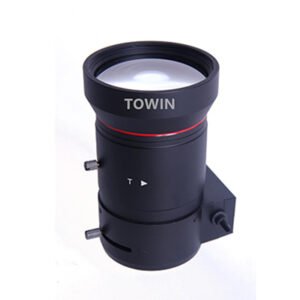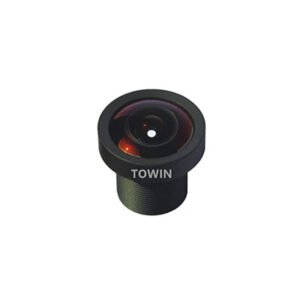

Machine vision systems are transforming industries like manufacturing, healthcare, and logistics by enabling precise, automated inspection and analysis. However, the performance of these systems hinges on selecting the right machine vision lens. Choosing an unsuitable lens can lead to blurry images, inaccurate measurements, or system failures.
1. Focal Length and Field of View
The focal length of a machine vision lens determines its field of view (FOV) and working distance (WD). A shorter focal length provides a wider FOV, making it ideal for capturing large areas, such as conveyor belts in packaging lines. Conversely, a longer focal length narrows the FOV but increases magnification, suitable for inspecting small components like electronic chips.
For example, a 12mm lens might cover a 500mm x 500mm area at a 300mm working distance, while a 50mm lens could focus on a 100mm x 100mm section at the same distance. Matching the focal length to your application’s FOV requirements is essential for optimal image clarity.
2. Resolution and Sensor Compatibility
Resolution refers to the lens’s ability to distinguish fine details, measured in line pairs per millimeter (LP/mm). Higher-resolution lenses capture sharper images but require compatible sensors. For instance, a 5-megapixel camera needs a lens capable of resolving at least 5MP to avoid bottlenecking performance.
Sensor size also matters. A lens designed for a 1/2” sensor may vignette or distort images when paired with a 2/3” sensor. Always verify that the machine vision lens supports your camera’s resolution and sensor dimensions to avoid subpar results.
3. Lighting and Aperture Control
Lighting conditions significantly impact image quality. A lens with adjustable aperture (f-stop) allows you to control light intake, preventing overexposure in bright environments or underexposure in dim settings. For example, an f/2.8 lens lets in more light than an f/8 lens, making it better for low-light applications.
Additionally, lenses with anti-reflective coatings minimize glare and ghosting, enhancing contrast in challenging lighting. Proper lighting and aperture selection ensure consistent, high-quality imaging.
4. Working Distance and Mounting Constraints
The working distance—the space between the lens and the object—varies by application. In robotic assembly, a compact lens with a short WD may suffice, while automotive quality control might require a lens with a longer WD to inspect large parts from a safe distance.
Mounting constraints, such as physical space or vibration resistance, also influence lens choice. For instance, a ruggedized lens with locking screws may be necessary for industrial environments prone to vibrations.
5. Distortion and Image Quality
Distortion, whether barrel (curved outward) or pincushion (curved inward), can skew measurements and affect accuracy. High-precision applications like medical imaging demand lenses with minimal distortion.
Modern machine vision lenses often incorporate aspherical elements to reduce distortion and improve edge-to-edge sharpness. Always review distortion charts provided by manufacturers to ensure compatibility with your accuracy requirements.
6. Environmental and Operational Conditions
Harsh environments demand lenses built to withstand dust, moisture, or extreme temperatures. For example, a food-processing facility might require an IP67-rated lens to resist washdowns, while an outdoor surveillance system needs a lens with weatherproofing.
Operational factors like vibration, shock, and continuous use also play a role. Opt for lenses with robust housing and thermal stabilization to ensure longevity in demanding settings.
7. Cost vs. Performance Trade-offs
Balancing budget and performance is crucial. While high-end lenses offer superior optics, they may not justify the cost for basic applications like barcode scanning. Conversely, cutting corners on lenses for critical tasks like defect detection can lead to costly errors.
Evaluate your application’s tolerance for errors and prioritize features accordingly. For instance, a mid-range lens with good resolution and distortion control might offer the best value for general-purpose inspection.
FAQs
How does focal length impact machine vision lens selection?
Focal length determines the field of view and working distance. Shorter focal lengths provide wider coverage, while longer focal lengths offer higher magnification for detailed inspections.
What is the role of resolution in choosing a machine vision lens?
Resolution ensures the lens can capture fine details without compromising image quality. Match the lens’s resolving power to your camera’s sensor to avoid performance bottlenecks.
Can environmental factors affect machine vision lens performance?
Yes, factors like dust, moisture, and temperature extremes can degrade image quality. Choose lenses with protective coatings or rugged housings for harsh environments.
Why is distortion important in machine vision lens selection?
Distortion can skew measurements and reduce accuracy, especially in high-precision tasks. Opt for lenses with minimal distortion or software correction capabilities.
How do I balance cost and performance when selecting a machine vision lens?
Prioritize features based on your application’s needs. For basic tasks, a mid-range lens may suffice, while critical inspections demand higher-end optics despite the cost.
Conclusion
Selecting the right machine vision lens requires careful consideration of focal length, resolution, lighting, working distance, distortion, environmental factors, and cost. By evaluating these seven factors, you can ensure your system delivers accurate, reliable results tailored to your application’s demands.