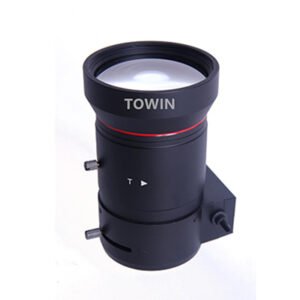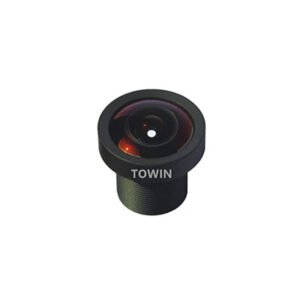

Machine vision lenses are the backbone of automated inspection, robotics, and quality control processes across industries like automotive, pharmaceuticals, and electronics. These specialized lenses rely on precise optical parameters to capture high-resolution images under varying conditions. One critical parameter is aperture size, which directly affects image quality, depth of field, and system efficiency. Understanding how aperture size impacts machine vision lenses is essential for engineers and technicians aiming to design or upgrade vision systems.
The Basics of Aperture Size in Machine Vision Lenses
Aperture size refers to the diameter of the lens opening that controls how much light enters the camera sensor. In machine vision lenses, this is typically denoted by the f-number (f/#), calculated as the ratio of the lens’s focal length to the aperture diameter. For example, an f/2.8 aperture allows more light than an f/8 aperture, making it ideal for low-light environments.
How does aperture size impact machine vision lenses? It influences three key aspects:
- Light Sensitivity: Larger apertures (lower f-numbers) gather more light, enabling faster exposure times and clearer images in dim settings.
- Depth of Field (DoF): Smaller apertures (higher f-numbers) increase DoF, keeping more of the scene in focus—critical for inspecting objects with varying heights.
- Image Sharpness: Aperture size affects diffraction limits, which can reduce resolution at extremely small or large settings.
1. Light Sensitivity and Exposure Control
Machine vision systems often operate in environments with inconsistent lighting, such as factories or outdoor settings. The aperture size determines how well the lens adapts to these conditions. A larger aperture (e.g., f/1.4) allows more light to reach the sensor, reducing the need for artificial lighting or longer exposure times. This is particularly useful for high-speed applications, like conveyor belt inspections, where motion blur must be minimized.
Conversely, smaller apertures (e.g., f/16) restrict light intake, which can be advantageous in brightly lit environments to prevent overexposure. However, this comes at the cost of reduced DoF and potential noise in low-light scenarios. Balancing aperture size with sensor sensitivity and lighting setups is crucial for achieving optimal results.
2. Depth of Field and Focus Range
Depth of field is the range of distances within which objects appear acceptably sharp. In machine vision, DoF is vital for inspecting 3D objects or multi-layer assemblies. Smaller apertures (higher f-numbers) increase DoF by narrowing the cone of light rays entering the lens, ensuring more of the scene remains in focus. For instance, an f/16 aperture might be used to inspect a circuit board with components at different heights.
However, excessively small apertures introduce diffraction, a phenomenon where light waves bend around edges, causing blurriness. This limits the maximum achievable resolution, especially in high-magnification applications. Engineers must strike a balance between DoF and diffraction to maintain image clarity.
3. Image Sharpness and Resolution
The relationship between aperture size and image sharpness is non-linear. While smaller apertures improve DoF, they also reduce the lens’s resolving power due to diffraction. Conversely, larger apertures minimize diffraction but may suffer from optical aberrations like spherical aberration or chromatic distortion, which degrade edge sharpness.
Modern machine vision lenses use advanced coatings and aspherical elements to mitigate these issues. For example, lenses with fixed apertures (e.g., f/2.8) are optimized for specific resolutions, ensuring consistent performance across the image plane. Understanding the trade-offs between aperture size and optical quality is key to selecting the right lens for your application.
4. Practical Considerations for Machine Vision Applications
When choosing machine vision lenses, consider the following factors related to aperture size:
- Working Distance: Lenses with larger apertures may require shorter working distances to maintain focus, limiting flexibility in setup.
- Field of View (FoV): Aperture size affects the light distribution across the FoV. Wide-angle lenses with large apertures may exhibit vignetting (darkening at the edges).
- Cost: Lenses with adjustable apertures (iris diaphragms) are more versatile but often pricier than fixed-aperture models.
FAQs
What is the ideal aperture size for machine vision lenses?
The ideal aperture depends on the application. For low-light conditions, use larger apertures (f/1.4–f/2.8). For high DoF requirements, opt for smaller apertures (f/8–f/16), but avoid excessive diffraction.
How does aperture size affect inspection speed?
Larger apertures allow faster shutter speeds, reducing motion blur and enabling higher throughput in high-speed inspections.
Can I use a DSLR lens for machine vision?
While possible, DSLR lenses lack the ruggedness and precision of industrial-grade machine vision lenses. They may also have incompatible mounts or limited DoF control.
What is diffraction, and why does it matter?
Diffraction occurs when light bends around aperture edges, causing blurriness. It becomes noticeable at small apertures (e.g., f/16+) and limits resolution.
How does aperture size impact lens cost?
Lenses with adjustable apertures or large maximum apertures are typically more expensive due to their complex designs and higher-quality optics.
Conclusion
How does aperture size impact machine vision lenses? The answer lies in balancing light sensitivity, depth of field, and image sharpness to meet application-specific demands. By selecting lenses with appropriate aperture sizes and understanding their trade-offs, engineers can enhance system performance, reduce costs, and improve inspection accuracy.