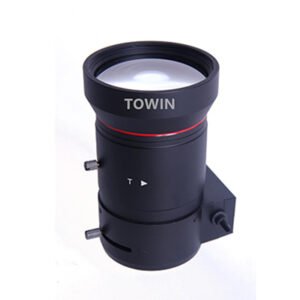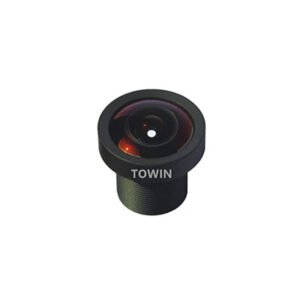

Laser technology has transformed industries from manufacturing to healthcare, but its success hinges on precision optics. Among these, Aspheric M12 Lenses for Laser Applications stand out as game-changers. Designed to minimize spherical aberration and maximize light focus, these lenses are reshaping how lasers operate in high-stakes environments.
Why Aspheric M12 Lenses for Laser Applications Matter
In traditional spherical lenses, light rays bend unevenly, causing blurring and reduced efficiency—a problem magnified in laser systems where precision is non-negotiable. Aspheric M12 Lenses for Laser Applications solve this by using a non-spherical surface profile, ensuring all light rays converge at a single focal point. This innovation reduces optical distortions by up to 80%, making them ideal for applications requiring tight beam control, such as laser cutting, medical imaging, and LiDAR.
Their M12 design (also known as TO-18 or TO-39) further enhances versatility. These compact, threaded lenses fit seamlessly into standardized housings, simplifying integration into existing laser setups. Whether you’re working with fiber lasers, CO2 lasers, or diode-pumped systems, Aspheric M12 Lenses offer plug-and-play compatibility without sacrificing performance.

Technical Specifications: What Makes Them Unique?
- 1. Material & Coating: Typically crafted from fused silica or optical-grade polymers, these lenses withstand high temperatures and UV exposure. Anti-reflective coatings (e.g., broadband AR) minimize back reflections, boosting transmission efficiency by 99% or more.
- 2. Focal Length & NA: Aspheric M12 Lenses come in focal lengths ranging from 1mm to 50mm, with numerical apertures (NA) up to 0.6. This flexibility allows customization for short-distance focusing (e.g., laser engraving) or long-range projection (e.g., LiDAR).
- 3. Thermal Stability: Unlike plastic lenses, glass-based Aspheric M12 variants maintain focus integrity across -40°C to 150°C, critical for automotive or aerospace lasers.
5 Key Benefits of Aspheric M12 Lenses for Laser Applications
- 1. Enhanced Precision: By eliminating spherical aberration, these lenses produce sharper focal spots, reducing errors in laser machining or 3D printing.
- 2. Compact Design: The M12’s threaded form factor saves space, enabling miniaturization in portable devices like handheld laser scanners.
- 3. Cost Efficiency: Fewer lens elements are needed (often just one aspheric lens vs. multiple spherical lenses), cutting production costs by 30–50%.
- 4. Durability: Scratch-resistant coatings and robust materials extend lifespan, even in harsh industrial environments.
- 5. Versatility: Compatible with visible, NIR, and UV wavelengths, they support diverse applications from semiconductor inspection to dermatology.
Common Applications Across Industries
- Manufacturing: Laser cutting and welding rely on Aspheric M12 Lenses to maintain beam quality over long operational hours.
- Healthcare: In ophthalmology, these lenses focus laser energy precisely during LASIK procedures, minimizing tissue damage.
- Automotive: LiDAR systems use them to project and receive laser pulses accurately, enabling autonomous vehicle navigation.
- Telecommunications: Fiber-optic networks leverage their low-loss properties for high-speed data transmission.
FAQs
1. What’s the difference between aspheric and spherical M12 lenses?
Aspheric lenses use a curved surface to correct aberrations, while spherical lenses rely on a uniform curve, which introduces distortions.
2. Can Aspheric M12 Lenses handle high-power lasers?
Yes! When paired with heat-resistant coatings and materials like fused silica, they can manage powers exceeding 100W.
3. Are they compatible with all laser wavelengths?
Most Aspheric M12 Lenses are optimized for specific ranges (e.g., 400–1100nm for visible/NIR). Always check the manufacturer’s specs.
4. How do I clean these lenses without damaging them?
Use isopropyl alcohol and a microfiber cloth. Avoid abrasive materials or excessive pressure.
Conclusion
Aspheric M12 Lenses for Laser Applications are not just an upgrade—they’re a necessity for industries demanding uncompromising precision. By reducing aberrations, saving space, and cutting costs, these lenses empower engineers to push the boundaries of what’s possible.